
Finding Winona Residents
Winona records work best as a chain. The Winona County parcel record can identify an owner, a situs address, a mailing address, and a parcel number. The Winona Recorder can then tie that parcel or legal description to deeds. A name-and-address registration confirmation is a separate check, while a Winona library directory or newspaper may be the better source for a former household. Start with the question. A relative tracing Winona family history needs a different record from someone checking a parcel or trying to verify a document reference.
A Winona result is evidence, not a complete household list. A Winona owner may use an agent or another mailing address. A Winona parcel can be vacant, commercial, or held by a trust. Some Winona residents will not appear in open material at all. Keep the Winona document date, record type, and custodian with each finding so that a same-name match does not become a false identification.
- Use the address, owner name, or parcel identifier in the Winona County Parcel Viewer when the question is about property.
- Confirm a submitted name and current address through Winona’s MNVotes route when registration is the relevant fact.
- Move from a Winona parcel or legal description to LandShark for the recorded-document trail.
- For a past Winona household, compare library directory years with newspapers, obituaries, and census material.
- Ask the named Winona custodian for an index, image, inspection, or copy when an online route stops.
Winona Residents Records Offices
Winona County does not use one catch-all clerk for resident evidence. The Winona Recorder holds land recordings. The Winona Assessor maintains the parcel and valuation layer. The Winona Auditor-Treasurer administers elections and property-tax functions. The Winona District Court Administrator keeps court files, while Winona County Vital Records handles local copy routes for qualifying birth, death, and marriage requests. Their records overlap in useful ways, but the Winona custodian decides access and can explain a missing or restricted result.
Winona County Recorder
202 W Third Street
Winona, MN 55987
507-457-6340
Winona County Assessor
202 W Third Street
Winona, MN 55987
507-457-6300
Auditor-Treasurer Elections Office
202 W Third Street
Winona, MN 55987
507-457-8830
Winona Parcel and Deed Trails
The Winona County Parcel Viewer, commonly called Beacon, is the starting point for a Winona property question. It is intended to accept an owner name, property or situs address, or parcel number. The Winona County tax instructions use the parcel pattern xx.xxx.xxxx and say to enter numbers only. Copy the Winona parcel identifier and legal description before changing systems. A Winona property’s situs is where the parcel lies; its tax mailing address can belong to an owner, agent, trust, or business elsewhere.
Winona LandShark provides the Recorder’s document routes: Tract, Grantor/Grantee Index, Vol/Page, Document Number, and Map. Abstract data is listed from September 1, 1987 forward, while the grantor/grantee index reaches 1938-1984. Images may be found by document number from May 16, 1967 forward, with older images available through volume and page. When the remote view ends, Winona public office computers, a tract search, or Winona Recorder staff are the documented fallback. The detailed address sequence belongs in the Winona street directory record trail.
- Parcel
- A Winona County-assigned unit of land used in assessment and mapping.
- Situs address
- The physical address assigned to a Winona parcel, which is different from a tax mailing address.
- Legal description
- The lot, block, plat, or metes-and-bounds description used in Winona title records.
- Criss-cross search
- A Winona backward-ownership method that moves from a grantee’s purchase to the prior grantor’s acquisition.
Note: A parcel owner or homestead classification can be a useful lead, but neither one alone proves a person currently occupies the address.
Winona MNVotes Confirmation
MNVotes is Minnesota’s one-person registration check for a submitted Winona name and address. It asks for first and last name, all parts of the date of birth, and a residence-address path. In ZIP mode, the Winona search moves through ZIP code, city or township, house number, and street, with an apartment or unit field when needed. The search is updated nightly, although election officials may need up to 14 days to process a change. A match confirms a Winona registration and voting links; a no-match result points to next steps.
| MNVotes field | How Winona searchers use it |
|---|---|
| First and last name | Required name fields; suffixes and diacritics are not accepted. |
| Month, day, year of birth | All three are required for the confirmation route. |
| ZIP or county mode | Choose the address path before selecting city or township. |
| House number and street | Required address match fields; street is selected from the available list. |
| Unit number | Required only after the apartment or unit option is selected. |
MNVotes is not a Winona street-wide roster. Minnesota Statutes section 201.091 restricts public voter-list access, use, and searchable Internet republication. A lawful Winona voter-file request follows its own certification and purpose rules, so a broad address list should never be inferred from the confirmation screen.
Current Winona Residents Sources
There is no official, open roster of every Winona household. Current sources are narrower by design. Property material records a parcel relationship. MNVotes confirms a submitted registration. Court records document public proceedings, not where someone lives. State business and credential searches can show an association with a filing or license. Treat each as a source for one verified fact, then compare dates and identifiers before connecting them.
| Winona source | What it can establish | Custodian | Access route |
|---|---|---|---|
| Winona Beacon parcel record | Owner, mailing and situs addresses, parcel and valuation context | Winona County Assessor | Public viewer intended; card fields should be checked live |
| Winona MNVotes path | One person’s registration status and submitted voting address | Secretary of State | Free confirmation with name, DOB, and address |
| Winona LandShark | Grantor, grantee, legal description, document, and recording date | Winona County Recorder | Online coverage varies; office and copy routes remain |
| Winona MCRO result | Public case party, docket, court location, and filings where available | Minnesota Judicial Branch | Free covered web results and courthouse terminals |
| City staff directory | Government work contacts only | City of Winona | Public departmental contact list, not a resident roll |
Official Winona records preserve their purpose. A recorded Winona deed may document a transfer. A court result may identify a party in a public proceeding. A staff listing identifies the official who keeps a record. That narrowness is a strength because it leaves an audit trail back to the source.
Winona Court Record Checks
Winona County District Court is part of Minnesota’s Third Judicial District. MCRO Case Search offers Case, Document, Hearing, and Judgment routes for a Winona court question. Its name search uses a required last name with optional first and middle names, date filters, case categories, status, and Winona County or statewide location options. A trailing wildcard may be used after at least two characters, but it cannot be paired with Sounds Like.
Covered Winona results can show a case number, parties, date filed, court location, type or status, and a Record of Actions route. They do not establish a current address or the final meaning of a case without reviewing the record. Juvenile, sealed, expunged, adoption, HRO/OFP, and other restricted material may not be remotely visible. Winona courthouse terminals can provide more access than the public web system under the court’s rules.
Note: A case category is not a final outcome, and a same-name court result needs another verified identifier before it is connected to a Winona resident.
Winona Vital Record Routes
Winona County Vital Records is the local registrar at 202 W Third Street. It lists Winona County births from 1870-1934 and statewide births from 1935 forward; Winona County deaths from 1870-1996 and statewide deaths from 1997 forward; and marriage certificates for people who applied in Winona County from 1854 forward. The Minnesota Department of Health provides statewide copy and mail or fax options. A MOMS index hit points to the custodial county for a marriage certificate, while a Winona divorce decree remains a court record.
Minnesota Statutes section 144.225 makes Winona birth access conditional and opens inaccessible birth data after 100 years. Death records are public, though certified-copy eligibility differs from noncertified access. A date from a Winona index is a research lead, not the same thing as a certificate. When a copy is needed, ask the Winona registrar which form, identity proof, relationship rule, and current charge applies.
Winona License and Filing Clues
State filing and credential systems can help Winona researchers distinguish two people with the same name. The Minnesota Secretary of State Business Search accepts a business name or file number and offers Begins With or Contains, active or inactive status, prior-name options, and advanced controls. A public filing can identify an entity, registered office, agent, organizer, officer, manager, or filing history. It documents a Winona business relationship, not a home address.
The Secretary of State’s business-search screen shows the status and scope controls that can narrow a filing search.
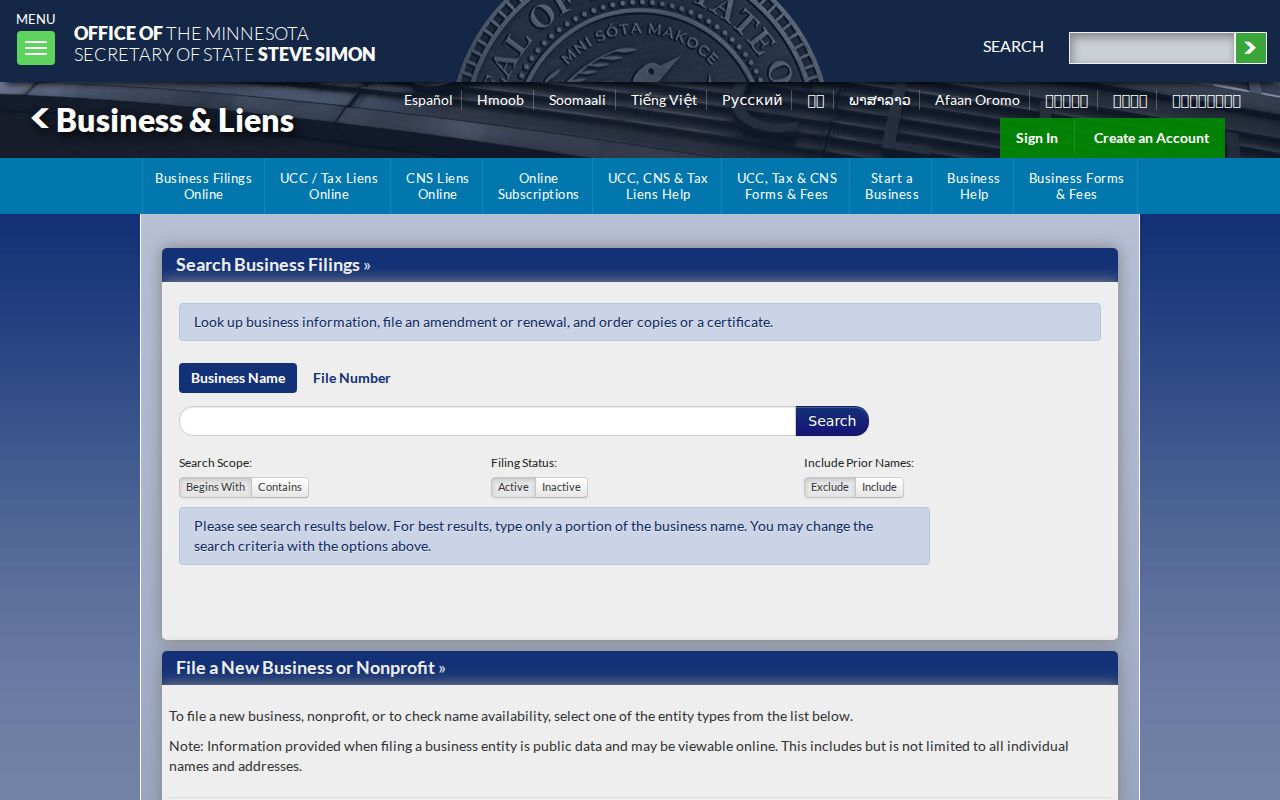
Use the entity number, filing date, and record role to keep a filing association separate from a residency claim.
The Minnesota professional license search is another official, dynamic search surface. Board-specific systems may provide the more useful record when a credential needs confirmation.
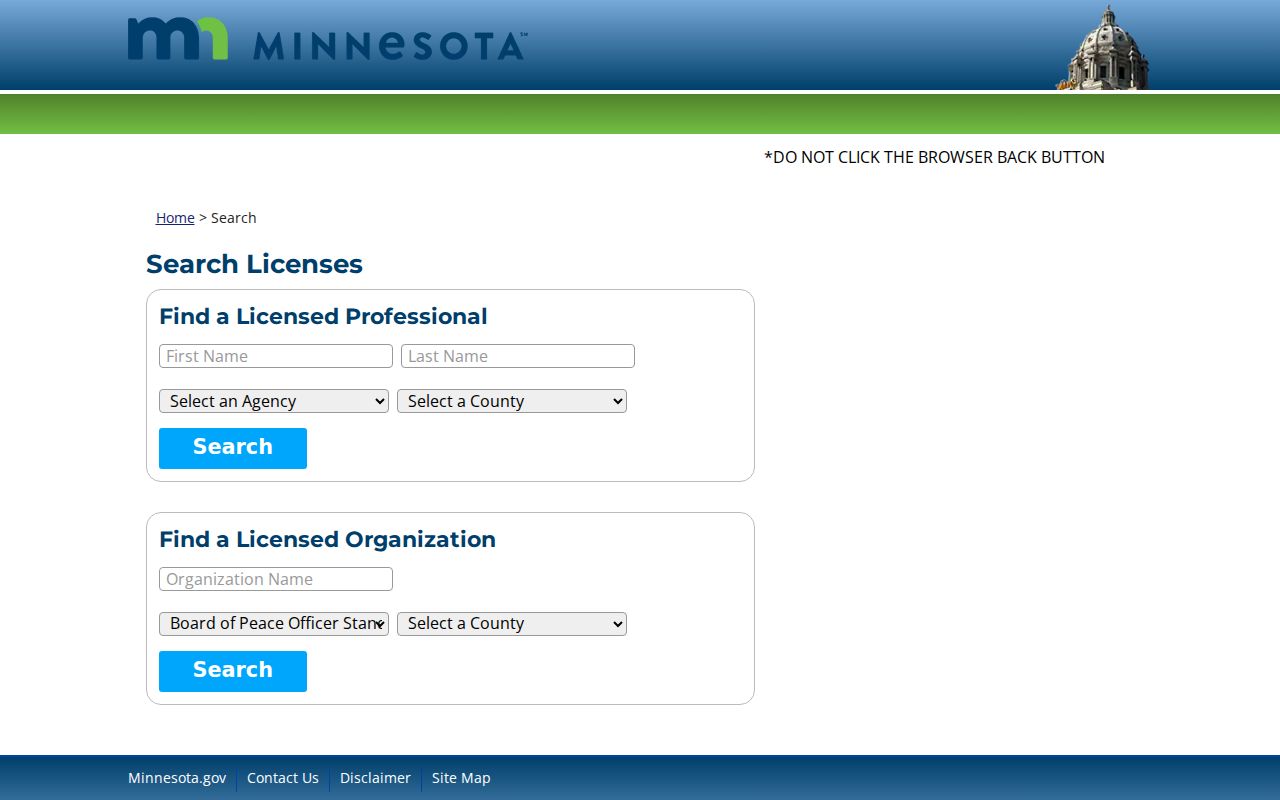
A credential status can corroborate a public professional association, but it should not be stretched into proof of a person’s household.
Winona Official and Commercial Sources
When records disagree, return to the original custodian. Official sources normally identify the record type, date, office, and access limits. Commercial people-finder products may combine public records, marketing data, and old address associations, often without the custodian’s context. They can also merge people who share a name. That makes them a weak starting point for a family-history question, estate matter, or scam check.
| Source class | Best use | Key limit |
|---|---|---|
| Official custodian | Confirm a dated parcel, filing, case, registration, or certificate procedure | Each office publishes only the record type it controls |
| Library or archive | Trace older households through directories, newspapers, maps, and local collections | Years, OCR, and access vary by collection |
| Commercial compilation | Generate a question to verify elsewhere | May be stale, incomplete, or joined to the wrong person |
A Minnesota notary search can likewise verify a commission by name, commission number, or county, with inactive and remote-notarization options.
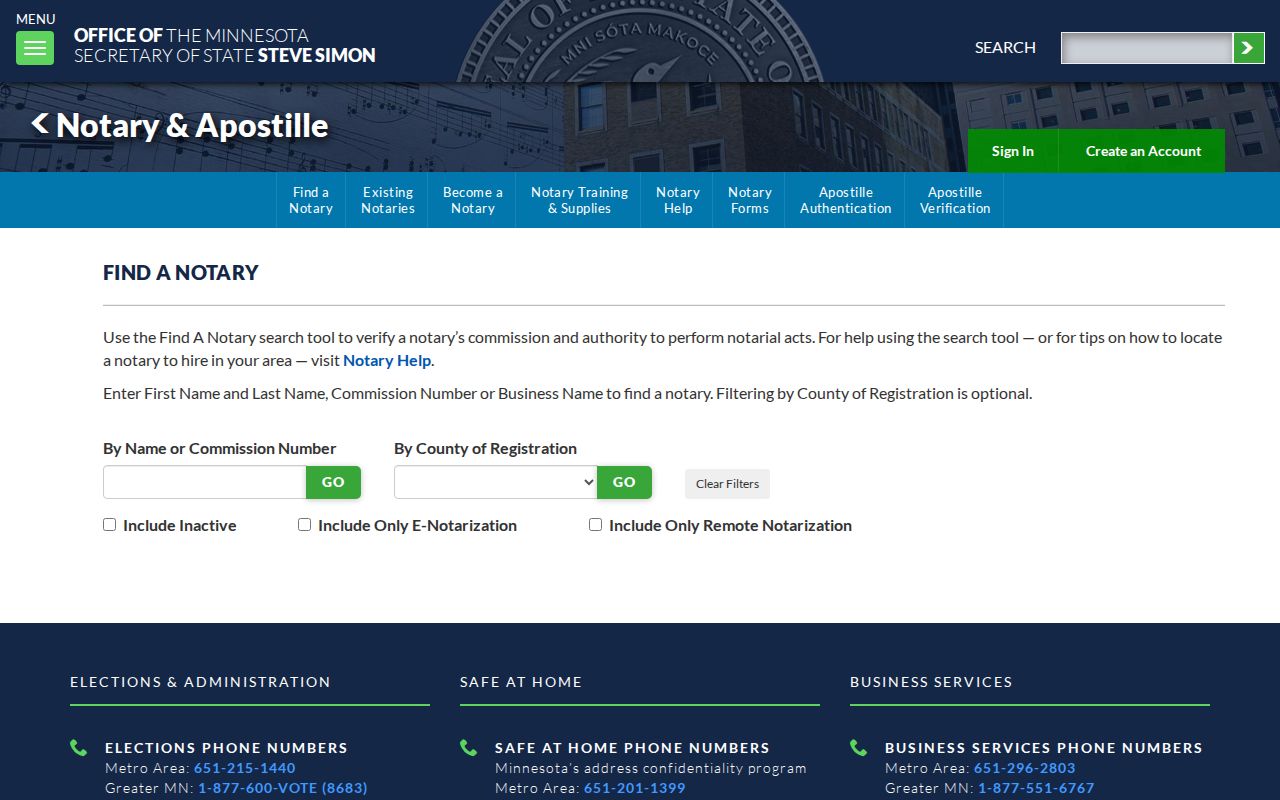
That result is a commission record. It does not establish the commissioner’s current home address or personal circumstances.
Past Winona Residents on Paper
Historical records give Winona unusual depth. Winona County Historical Society reports city directories from 1866 forward, while Winona Public Library reports directories from 1872 forward with missing years. The first identified volume is an 1866 Winona Directory published by John M. Wolf and A. Bailey. Later titles changed publishers, and Winona Directory Company editions are identified from 1901-1941. A missing year or an unverified final print date is a gap, not a reason to fill in a household by guesswork.
The Winona city directory collections explain how to read the old volumes in detail. For names outside a directory year, the library’s newspaper microfilm begins in 1860, and Winona State University’s OpenRiver archive provides digitized papers from 1855-1976. Search initials, maiden and married names, street abbreviations, and old place-name variants such as Wenonah or Wynona, then check the original issue because OCR can miss a name.
Winona Archive Request Options
Not every useful record is in a searchable portal. Winona Public Library holds city directories, in-house Ancestry Library Edition, newspaper microfilm, and obituary indexes for 1960-1979, 1980-1999, and 2000-2010. Its research service accepts article or obituary requests, usually searches seven days from a death date, limits requests to three per month, and states a one-to-four-week turnaround. Minnesota residents use the service without charge; an out-of-state request is listed at $2.
Winona County Historical Society adds appointment-based archives, local newspapers, city directories, vital statistics, cemetery records, plat maps, photographs, and business or organization papers where held. Its Laird Lucas Library & Archives has a nonmember admission charge that includes the first 15 minutes and an archivist rate for deeper assistance. Give a full name, date span, record group, and whether an index or image is wanted before making a request.
Winona Property Fraud Alerts
Property records can be useful and can also be misused by impersonators. Winona County’s free Land Notification service alerts a subscriber to new activity on a monitored land record and permits up to five email addresses and two mobile numbers per alert. It is a practical follow-up after a parcel search, especially when a deed or mortgage document has been reviewed. Confirm sign-up details through the county’s official route rather than a letter, text, or unsolicited payment request.
The FBI’s June 2026 warning describes parcel-owner impersonation that can draw on public websites, data brokers, stolen information, phishing, or dark-web sources. Verify an unexpected deed, mortgage, court, or unclaimed-property message by finding the custodian independently. A document number, official office phone, and recorded date are better verification points than a contact link supplied by the message.
Winona Data Request Fallbacks
The Minnesota Government Data Practices Act, Minn. Stat. chapter 13, generally presumes government data public unless another law classifies it differently. Under section 13.03, inspection is free at reasonable times and places, while copies can carry actual search, retrieval, material, and mailing costs. Winona County’s policy generally waives a charge for up to 100 black-and-white pages, then uses actual cost. A request should name the department, record type, address or identifier, date range, and whether inspection or copies are preferred.
Use the City Clerk for city records such as minutes, permits, or public portions of city files. Use the County data-practices channel for county-held material. If the request concerns a court file, vital certificate, or recorded document, go directly to the court administrator, registrar, or Recorder instead. That routing reduces delay and avoids asking one office to interpret another office’s record.
Winona Resident Privacy Boundaries
Minnesota public-records access has firm limits. Birth data, juvenile and adoption matters, sealed court material, protected-voter information, and driver data have separate rules. Safe at Home provides a substitute address and mail forwarding for qualifying people facing serious safety risks. A substitute address should not be treated as a puzzle to solve. The absence of a name from a public lookup can reflect privacy law, a record gap, or a source that does not cover the question.
Keep sensitive details out of notes and requests unless the custodian specifically requires them. If a record appears wrong, preserve the document number or date and ask the responsible office about correction or an explanatory notation. That approach protects both the person named in the record and the reliability of the research.